Cycle the Western Front Way: A Self-Guided Adventure Across History
Connecting the WWI Battlefields
The Western Front Way Cycling trail takes you along the historic First World War front lines.
Overview:
Concept: This is a serious but beautiful bike ride, created to follow the line of the WWI front with over 1,000km of former trenches, battlefields, and defences. You’ll bike through quiet villages, UNESCO sites and vineyards, open farmland, past bunkers, memorials, and areas like the Argonne, Vosges and the Somme. Made to understand all sides of the story, not just the one we’re taught. It is spectacular and here is how to get the best out of it.
Distance: 1,000 km (620 miles)
Duration: 7–14 days depending on your pace, stops and café discipline
Start: Porrentruy, Switzerland; official start is Kilometre Zero marker stone at Bonfol.
End: Nieuwpoort, Belgium
Ability: Suited to experienced riders who can handle long days, variable terrain, and some light gravel. You’ll want solid gear and legs that don’t scare easily.
Terrain: The trail comprises various surfaces, rural roads, forest tracks and paved paths. Gravel-friendly and road-capable.
Best For: Long-distance cyclists who want something really interesting and a bit of a challenge. This ride is about perspective when you understand what happened here. Forget the crowds too. This is quiet, properly adventurous, and one-of-a-kind.
Paper Maps: A digital map is provided below for straightforward navigation and trip planning, ideal for the majority who now use digital tools to map their journeys. For those who prefer paper, we recommend the excellent IGN Grande Guerre 1914–1918 map, available from the IGN website (preferred) or Amazon.
The Western Front Way. It’s Not Just Another Bike Trail
The Western Front and WWI wasn’t one country’s war. And this isn’t one country’s trail. It’s French, Belgian, German, South African, Australian, American, New Zealand, Indian, Canadian, British and more.
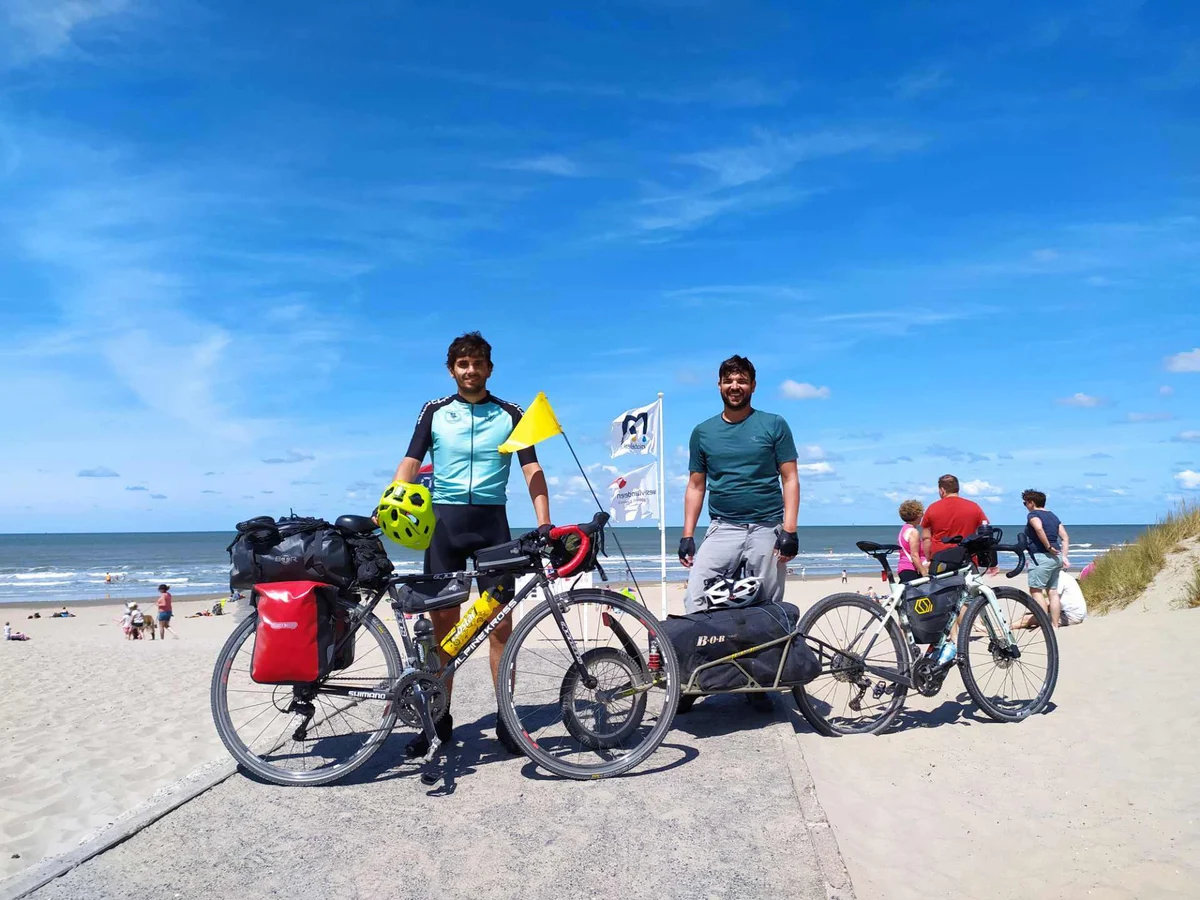
This isn’t a casual coasting cycle. It’s a 1,000km ride tracing the front line of the Western Front as closely as possible from the Kilometre Zero marker on the French-Swiss border to the beaches of Nieuwpoort, Belgium. A point-to-point journey on established trails passing field hospitals, trench networks, battlefields, and memorials.
This isn’t for cyclists chasing Kudos or clocking segments. This is for people who are genuinely interested in getting the most out of their time on a bike in the place they’re in.
If you’re time-strapped, cycling the Western Front Way is a perfect way to cover distance and still get the idea. But don’t turn up half-cocked. You’ll need to prep your kit, know your limits, and respect the route.
Ready to Begin?
The adventure starts here. Download or listen to uncover everything you need, detailed trail guides, booking options, tips, and inspiration to plan your cycle. For seasoned bike packers or cycling adventurers, the Western Front Way is your gateway to history, stories, and unforgettable adventure.
Looking for supported trips?
Freedom Trails specialises in guided and self-guided walking and cycling expeditions inspired by history and adventure. They manage and run our supported trips along the Western Front Way, offering expert leadership and immersive experiences on this 1,000 km trail.
Essentials to Know
South – North: A recommended start is from Basel Airport to Porrentruy (CH). Opposite Porrentruy station you will find the Hotel de la Gare. This efficient hotel has a restaurant and is ideally located to start early the following day. Porrentruy is a picturesque town with plenty of amenities, including a big Migros supermarket (closed on Sundays; buy Paprika crisps and their hand wash liquid for clothes!). If you need bike parts or repairs (or want to buy your trail bike in situ) you can purchase any last minute needs at Cycles Refouss and Olivélo.
From Porrentruy station, you can choose your start time using this train timetable to take you the 14mins regional train to Bonfol. This is where the Western Front Way trail begins.
North to South: The trail begins at the pier on beach front, near the tourism office in the coastal town of Nieuwpoort-Bad. Access to Nieuwpoort is a fast train from Brussels to Ostend approx. 1h30 (Fast train with one change from Brussels Midi – Gent – Bruges – Ostend). From Ostend book the regional tram to Nieuwpoort. (Nieuwpoort and Nieuwpoort-Bad are the same place, however, ‘Bad’ means beachfront). To get closer to Nieuwpoort-Bad, a city tram leaves every 15 minutes from platform 15, it takes 12 minutes and you alight near the tourism office. From here you are central to the hotels, beachfront restaurants, amenities and most importantly, the start point on the pier, near the tourism office, Hendrikaplein 11, 8620 Nieuwpoort.
Bikes on Trains: how to travel with a bike on a train in Europe.
Packing Checklist
- Gear: You’ll know the kind of things you’ll want to take to make this fun for you. Use our Essential Cycling Check List
-
Tyre choice: Wider tyres are recommended and we suggest 28mm-30mm to better handle the bike paths. It would not be suitable for road bikes as there can be gravel/uneven tracks.
-
Gravel/mountain bike: Ask your bike shop specialist. It would be influenced by the amount of kit you chose to carry and for how long.
- Food & Water: Due to limited amenities in certain areas, you should carry sufficient food, water, and emergency provisions. We highly recommend you always have enough food and water. We also recommend you carry emergency food sachets such as Firepot Meals. Pack energy-dense snacks and energy bars for easy-to-grab boosts.
- First Aid: Basic first-aid items must be carried.
Safety Tips and Trail Etiquette
-
- Trail Rules: Wild camping / bivouac is not prohibited but is tolerated and you must respect certain regulations – Le camping sauvage. Bivouacking is generally understood to mean a one-night stop, in respect to leaving no trace, and is implicitly authorised between the hours of 7 p.m and 9 a.m and is subject rules in coastal areas, listed natural sites and historic monuments. Making an open fire when wild camping in dry/and or wooded areas in France in summer is strictly forbidden. You must seek the owner’s permission if you camp on private land.
- Emergency Contacts: For life or death emergencies, dial 112 for immediate assistance in France & Belgium.
- Local Awareness: France and Belgium experienced profound devastation during WWI, with varied local perspectives that should be approached with respect. France faced three significant wars in close succession—the Prussian War, WWI, and WWII—with southern regions near Verdun often overlooked despite their fierce, mountainous conflicts.
- Many villages have seen population shifts, yet this area remains scenic and crowd-free.
Pont-à-Mousson – Sport 2000 and Cycles PAM
Who Inspired the Western Front Way?
The Western Front Way was inspired by A.D. Gillespie, a soldier in the Argyll and Sutherland Highlanders, who wrote a letter in 1915 from the trenches about a desire for a path to be traversed to understand the cost of war. The Western Front Way is a dynamic tribute to those who fought here.
“When peace comes, our government might combine with the French government, to make one long avenue between the lines from the Vosges to the sea….I would make a fine, broad road in the ‘No-Man’s Land’ between the lines with paths for pilgrims on foot and plant trees for shade and fruit trees, so the soil should not altogether be wasted. The I would like to send every man, woman and child in western Europe on a pilgrimage along that via sacra so they might think and learn what war means from the silent witnesses on either side”